Tag Archives: Mastectomy

Day 1 of recovery

Mobility

Although getting in and out of bed got easier, I was still unable to manage a trip to the bathroom in under 15 minutes. A nurse was called in each time I had to go. The feel-good button, the call nurse/TV remote, the oxygen tube, and the finger pulse oximeter clamp had to be removed before I even sat up. The IV bag was attached to the stand, we gathered up all four drains, hubby made sure my naked ass wasn’t completely bare and off we went. By about noon, we were able to do it without a nurse.

I started doing range of motion exercises while still at the hospital. If you haven’t already seen the video from Casey Eischen in my Post-op exercises post, make sure you check it out.

2/1: Check out a more recent post about exercise and nutrition: Foobie Fitness

Drains
Drain

Drain

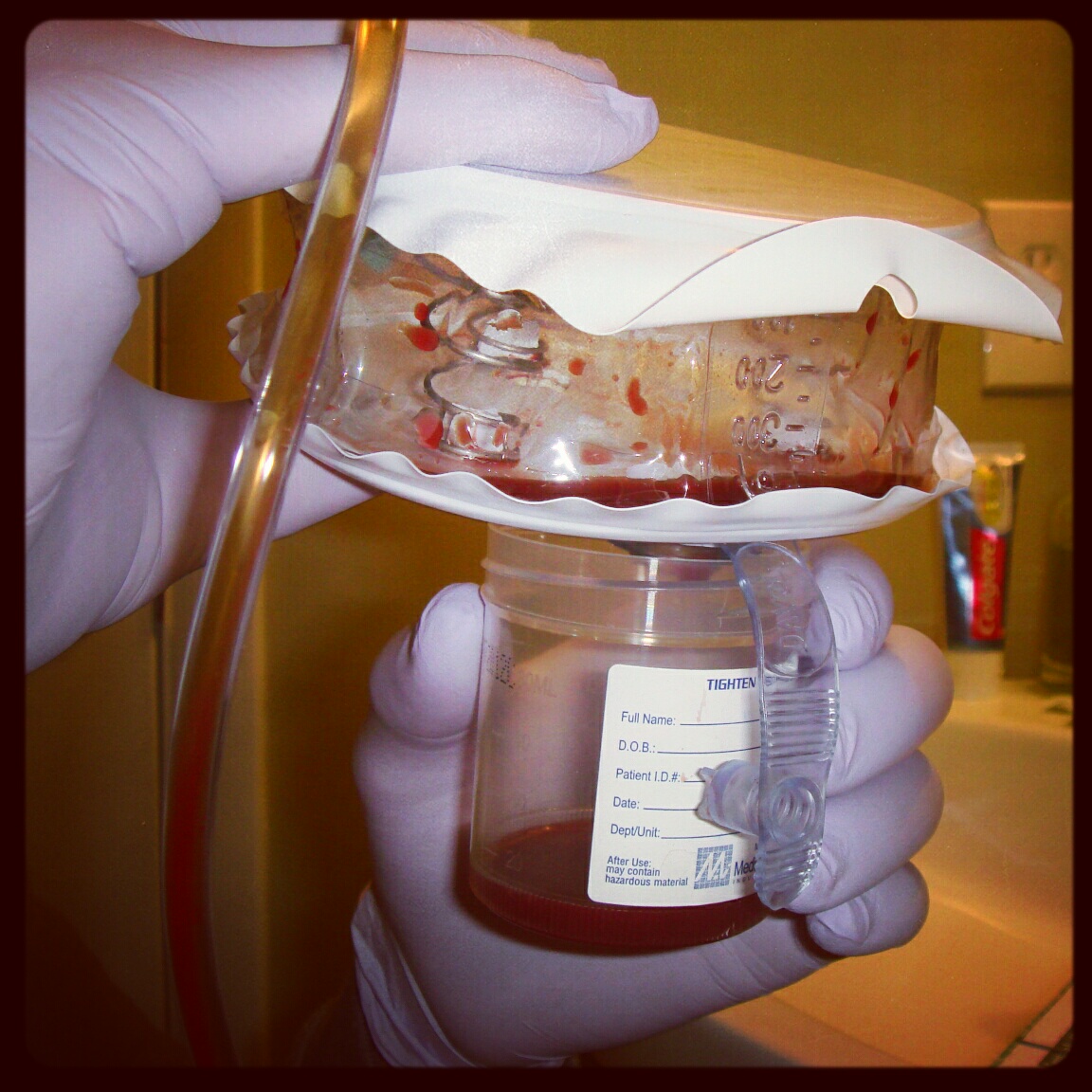
On the day of surgery and day 1 of recovery nurses emptied my drains. They weren’t the typical JP bulb-type ones, but oval hemovac spring evacuators. Each reservoir was labeled left/right and anterior/posterior. The fluid collected was measured and then recorded. Emptying them was not difficult; keeping them untangled was. Rather than coming out of my sides, the tubes exited my armpits. This placement made for a lot of discomfort anytime my arms were moving (= all the time).

Wound dressing

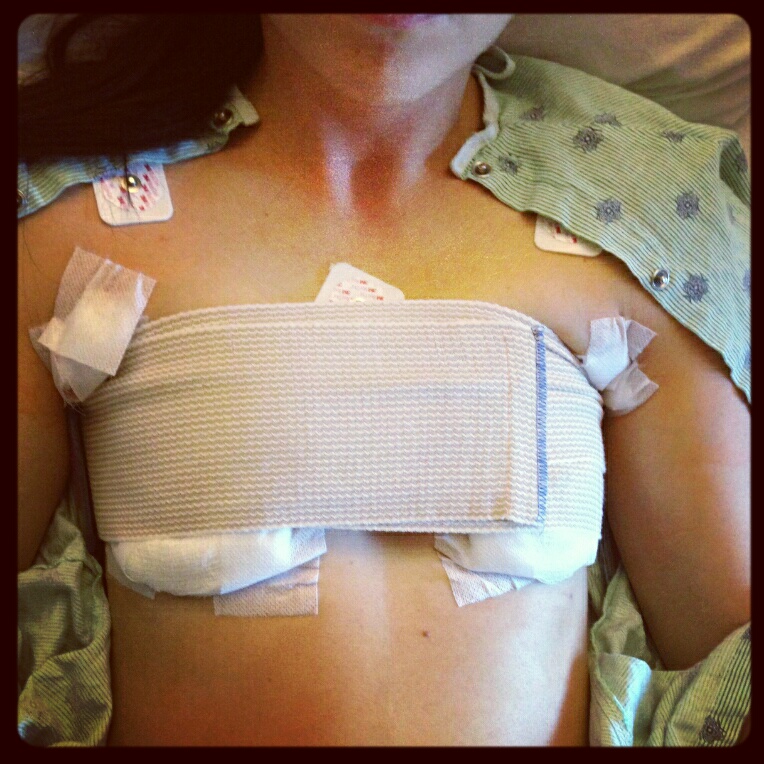
There was gauze and tape in the armpits for the drain tube sites; the incisions were covered by sterile strips; and the whole chest was wrapped in an ace bandage. Due to the meds, I didn’t feel much pain, but did feel discomfort and pressure – like an elephant sitting on my chest.
Dressings

Dressings

Food

DOsOn the day of surgery I was on a liquid diet, but it wasn’t even relevant as I was not hungry at all. I downed crackers and a lot of water. Hall’s Vitamin C cough drops helped with the dry mouth and throat. There was a menu in my room and food service staff came around collecting orders. I was worried about constipation, so I focused on high-fiber snacks and meals. Breakfast of choice was plain, bland, tasteless oatmeal. Lunch: dressing-less garden salad. Dinner: mushroom soup.

Spirometer

Spirometer

Spirometer

In-between meals and trips to the bathroom, I did breathing exercises using the spirometer. It is a plastic box with a tube attached to it, used to get the lungs back up to full capacity and to prevent pneumonia. You inhale through the tube and try to keep the ball in the air. This gizmo came home with me to continue the exercises.

Pain management and discharge

Typically patients return home after one night’s stay in the hospital. The throngs of nurses, residents, coordinators, and doctors (I really lost count) make their rounds in the morning to see how things are going. My breast surgeon determined I was in great shape and ready to go. The nurses started the process to ween me off the morphine and transition to my prescribed narcotics (Demerol). Don’t know who or why the call was made to give me something different than what I would have at home, but they started me on Norco. Pepcid AC and Colace joined the party too. This is about when the morphine itch started. The back scratcher was my best friend.

I just needed to see the plastic surgeon for his blessing to head home. He ended up with a couple of emergency patients and did not make it to see me. After we spoke via telephone I had the option to go home and start on the Demerol or stay another night and get a prescription for Norco filled when the pharmacy opened. I opted to say and not risk being in pain without access to a remedy.

That night was uneventful. On to Day 2 of recovery.

The big day

WARNING: NSFW / graphic content below.

Final preparations

NoteDuring the last few days before surgery, I made final preparations for the big day. One of them being picking up my dad from the airport. He surprised me the Thursday before surgery by telling me he purchased his ticket to fly in from Europe to spend a month out here and help my husband take care of me. A great relief to have an extra set of hands. It’s nice to have dad here, but I plan on making a quick recovery, so I hope he doesn’t get bored!
I received two separate calls from the hospital the day before the procedure confirming we were still a “go.” I got a lot of detailed information about the timeline and what the day would look like. I confirmed that 1. I would be in a private room (space for hubby AND dad to spend the night) and 2. the hospital has wi-fi.

The night before surgery, I made sure the recliner and area around it were ready for my return home. I gathered all of the things mentioned on my checklist, without exception. I packed my hospital bag with all of the necessities and hit the sack early. I was expecting to have a bit of anxiety in the last few days leading up to the surgery, so I had my doctor write me a prescription for Ativan. The bottle is still full. I was a bit nervous, but not as much as I thought I would be.

The morning of my prophylactic bilateral mastectomy

ID and FALL RISK wrist bands

ID and FALL RISK wrist bands

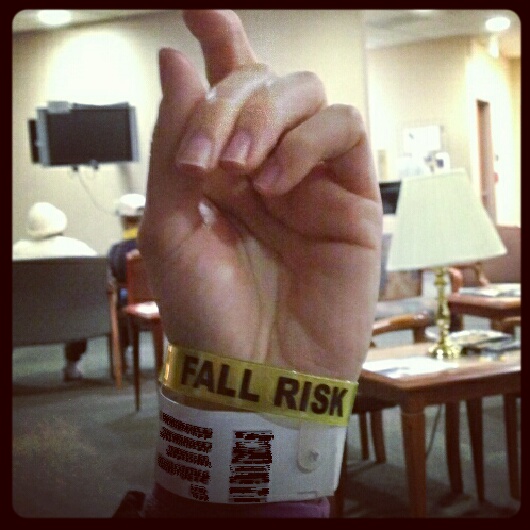
I was told to be at the hospital by 5:30am, with surgery scheduled to start at 7:30am. We arrived a bit early and waited to get checked in. The receptionist confirmed my name and date of birth and tagged me with my wrist band and the handy-dandy “FALL RISK” warning bracelet.

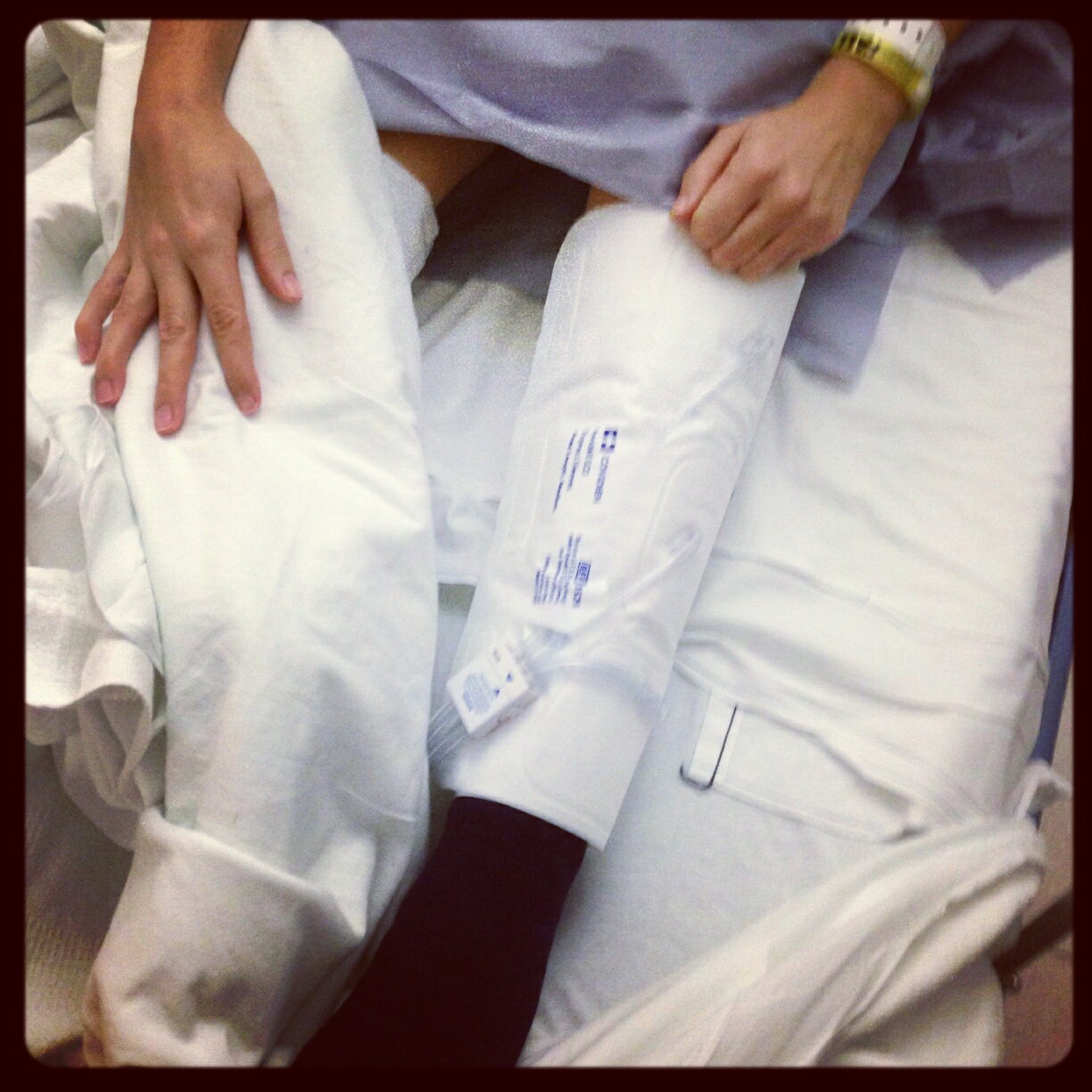
About 30 minutes later, I was called back by the pre-op nurse. She took my vitals, had me change into a Bair Paws gown (nothing underneath), and asked for a urine sample. We went over all of the paperwork, including consent forms I already signed. I was sure to point out that I didn’t consent to residents or fellows performing any part of the procedure, which was noted. She got my compression socks and booties on and hooked up, another nurse came in and got my IV line in, and then hubby and dad were called in to see me.

Compression socks and booties

Compression socks and booties

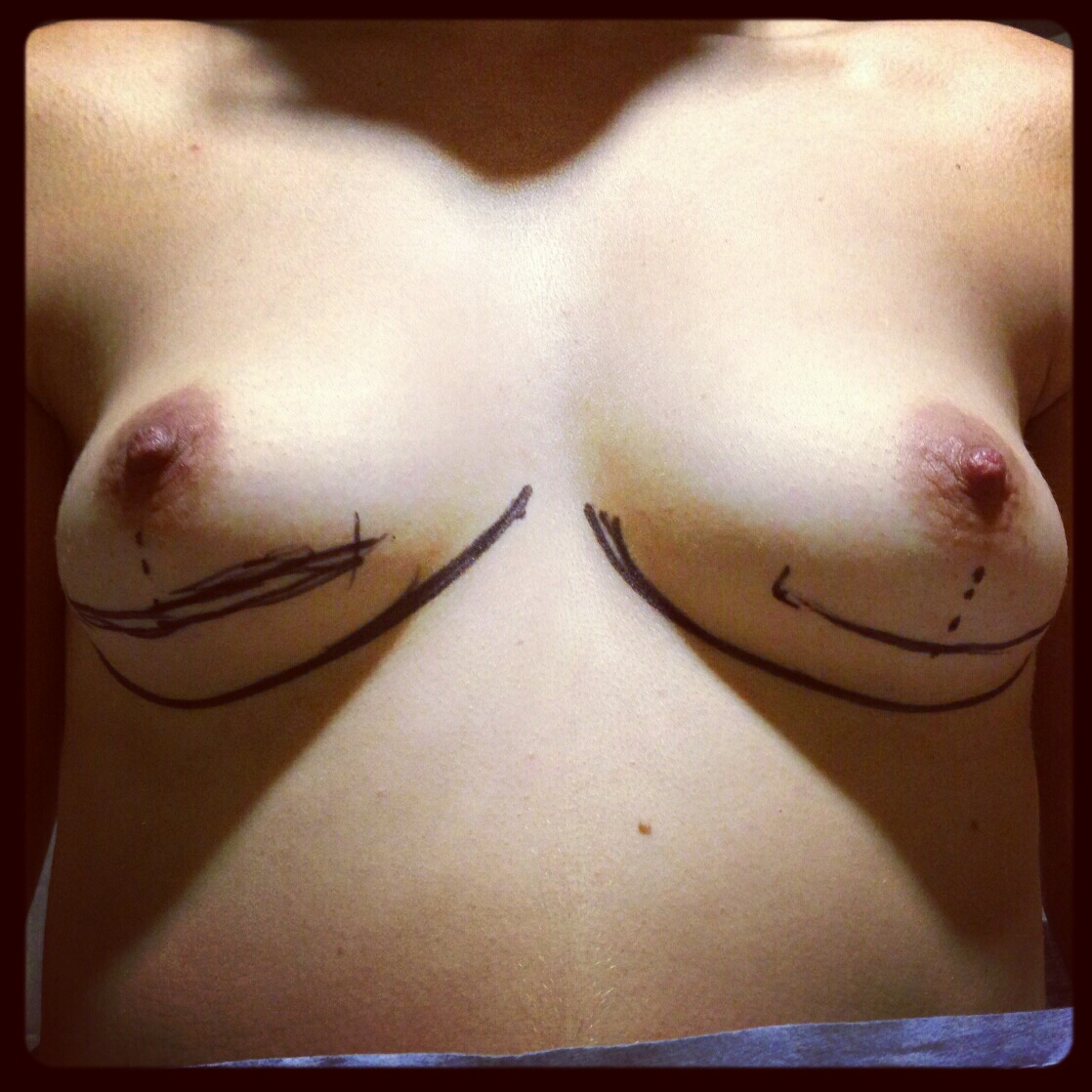
Incision markings

Incision markings

A few different nurses, the anesthesiologist, and both surgeons stopped by. I mentioned that I would love to not have any nausea once I woke up and they gave me something. The plastic surgeon marked up my chest wall for the smiley face incisions (with his high-tech Sharpie). BTW, I am 5’4″, 125lbs, and 34A.

I spent a few more minutes with the family and then it was time to roll out. I was wheeled to the operating room where I got to meet a few more of the surgical staff. I scooted over to the operating table, got my arms strapped in and that is all I remember.

The surgery took over five hours: three hours for the mastectomy, two and a half for the expander placement. The fam got regular updates from the operating room (five total) via telephone call into the waiting room. Each surgeon came out to speak with them when their piece was over.

Recovery room

I woke up in the recovery room with a nurse watching my vitals. She made sure I was comfortable and wasn’t feeling nauseous. After an hour another nurse came over to wheel me to my room. While he was there prepping, I had a very sudden wave of nausea wash over me. Got an injection of something and an alcohol swab to sniff (this actually helped) . Once I was OK, we made the trip to my room.

I had a bit of a hard time moving to the bed once in the room. The nurse offered his arm and started pulling me over, but that was painful. We decided to just have his arm available and I would pull instead. I think he got impatient and gave me a little yank at the end. I finally settled in and after about 20 minutes my husband and dad came to my room.

I was hooked up to a morphine drip, which delivered a steady flow of the golden juice. I also had a button I could push for an extra kick that could be added (only every 10 mins). The machine kept track of how often extra meds were requested and how many times it actually delivered. That day I had over 20 requests, but only 12 deliveries, if I remember correctly.

I ate crackers and drank a lot of water. I made my first trip to the bathroom around 7pm. Getting out of bed was rough – needed two people to help to and in the bathroom: one to manage the drains and the other to help on the toilet. Although I felt the need to go, I had a rough time making my body obey. I peed in a “hat” that measured the output which was recorded by the nurse. I made a total of four trips to pee the first night, with each one easier than the last.

It only gets better from here! On to Day 1 of recovery.

Post-op exercises

Check out this awesome video from Casey Eischen, BS, CSCS, CPT, CES, Health/Fitness Expert and Nutrition Coach, providing levels 1 & 2 of a great exercise program for women who have undergone a prophylactic bilateral mastectomy. More to come!

Exercises to Recovery from Phophylactic Mastectomy/Reconstruction

2/1: Check out a more recent post about exercise and nutrition: Foobie Fitness

Pre-op stuff

NoteThe countdown to my PBM has hit single digits! Less than a week away.

I have done/gathered almost every single thing on my checklist with the exception of the recliner. I’m borrowing one from a friend, because I don’t want to buy it just for the occasion and he has six.

Here are some of the pre-op instructions I received from both doctors.

DON'TsDON’Ts

  • Don’t use any aspirin or any products which may contain aspirin (acetaminophen/Tylenol is OK), vitamin E, fish oil, herbal medications, or diet pills within 14 days of surgery
  • Don’t smoke, exercise, or drink any alcoholic beverages for 24 hours
  • Don’t eat or drink ANYTHING, including water, after midnight
  • Don’t bring valuables (jewelry, excessive amounts of cash/credit cards)
  • Don’t wear makeup, perfume, or nail polish

DOsDOs

  • Do take your blood pressure, seizure, breathing, heart condition, or thyroid (but not diabetes) medications with small sips of water
  • Do bathe either the morning of or the night before surgery
  • Do wear proper clothing (top that opens in the front)
  • Do have a responsible adult with you to drive you home
  • Do bring your eyeglass case or contact lens case and solution, if needed

I’m anxious and scared, but very excited! Still feel that this is the right decision for me and that I am doing the right thing. Can’t wait to be on the other side.

Last details

  • Insurance pre-authorization: confirmed
  • Disability and FMLA forms: completed
  • Consent forms: signed
  • Pre-op instructions: received
  • Pain medications: prescribed

All that’s left to do now is to get through the items on my Preparing for surgery list, think positive, and avoid getting sick! It just got real. It’s the final countdown.

Went to see the plastic surgeon for the last pre-op appointment. We discussed a few last details:

  • QuestionsSome ladies are told not to shave, as it may increase chance of infection. Is shaving OK before the surgery? Yes, it’s fine.

  • Will I get a pain pump implanted or IV-type pain medication while at the hospital? The pain medication will be administered via IV, not a pump. Implanting the pump creates additional surgical/wound sites and isn’t necessary for this type of procedure.
  • How soon after surgery do I start follow ups? I will meet with the surgeons before leaving the hospital. If there are issues after leaving, may see the plastic surgeon every day, may not see him for a few days. Depends on how things go. Will keep in touch.
  • How soon will the first MRI need to be completed? The MRI is done two years after the implants are in, so nothing to worry about in the immediate future (especially since this will be a staged reconstruction, which means the final exchange of implants for expanders will not take place until about six months after mastectomy). These screenings will be monitored by the plastic surgeon. Breast cancer screenings will continue via clinical exams from the breast surgeon/OB-GYN/PCP.
  • Is physical therapy recommended? Not typically. Some women are back to normal fast, some take a few weeks. Try to do things without help from others (within reason). Brush your own hair the day you get back from the hospital. When you can shower, wash your hair yourself. Do some range of motion exercises. If not making progress, PT may be recommended to help with the recovery.

Added 1/19: Check out this awesome video from Casey EischenBS, CSCS, CPT, CES, Health/Fitness Expert and Nutrition Coach, providing levels 1 & 2 of a great exercise program for women who have undergone a prophylactic bilateral mastectomy. More to come!

Exercises to Recovery from Phophylactic Mastectomy/Reconstruction

Happy 14th Birthday FORCE

Happy New Year/Happy Birthday FORCE

FacingOurRisk.orgFORCE – Facing Our Risk of Cancer Empowered just celebrated its 14th Birthday! FacingOurRisk.org is an amazing site that I have spent many hours reading through. There is a message board, local group finder, lots and lots of articles and other resources, a photo gallery, info about studies and clinical trial, and so much more. If you haven’t yet visited FacingOurRisk.org, check it out!

Let’s give them a chance

The nipples … I decided to keep them.

I met with Dr. K to talk about a few things I wanted to revisit before we sealed the deal. One of them being: whether or not my mastectomy will be nipple-sparing (see Nipples, pecs, bras, OH MY!). Some of the things we talked about:

  • QuestionsHow much breast tissue (if any) will be left behind? A small disk of breast tissue remains under the nipple to prevent inversion.
  • What are the chances of breast cancer diagnosis? In the case of a prophylactic mastectomy (especially for a BRCA1/2-mutation-negative patient), the risk of developing breast cancer is still very low (<1%; see this summary table from the related article mentioned below). A long-term Georgetown study (related article #2 below) concludes that nipple-sparing mastectomy can be safe in properly selected patients.
  • What type of screening is done long-term? Screening is still required after any type of mastectomy via self and clinical exams. Mammography/ultrasounds/MRIs are generally not needed. However, screening MRIs are required when breast implants are used for reconstruction.
  • What are the chances of necrosis? From the nipple-sparing mastectomies my breast surgeon has performed, no nipples have been lost. He will make the incision laterally from the edge of the areola, versus circumareolar (tracing around it and then out). This will make the procedure technically a bit more difficult, due to a smaller access hole to the cavity, but will reduce the risk of necrosis. The article mentioned below also provides some data related to necrosis of the nipple-areola complex. 2/9: The incision that was actually made was a curved/smiley-face line about two inches below my nipple.
  • Will I have any feeling left? This is unlikely. Nipple(s) can become erect after this type of procedure, but the experience will not be the same as pre-mastectomy, both in cause and sensation.
  • Nipple Game Pad T-ShirtSo will I have permanent headlights? This is a possibility. A few of the ladies I’ve spoken to have expressed that this is true for them after a nipple-sparing procedure. As you can imagine, having constantly-erect nipples can make things awkward, so definitely something I hope I don’t have to deal with. However, in discussing with my PS, I learned that as with other possible unsatisfactory results, it can be addressed in a few different ways. Worst case scenario: another procedure to remove the nipples and areolae.

I’m confident that Dr. K is technically capable of performing this type of procedure and will do a great job. I am aware of the potential complications (not all listed here) – we’ll cross that bridge if we get to it.

Whew, that was the last thing to mull over, last detail to plan, last thing on my list that’s up to me (well, this list). Now the breast surgeon’s office confirms the insurance pre-authorization and I sign the consent forms. One pre-op appointment left with my plastic surgeon.

Related articles:

Genetic testing for BRCA mutations

BRCA1 and BRCA2 are human genes that belong to a class of genes known as tumor suppressors. Mutation of these genes has been linked to hereditary breast and ovarian cancer. – National Cancer Insitute

A woman’s risk of developing breast and/or ovarian cancer is greatly increased if she inherits a deleterious (harmful) BRCA1 or BRCA2 mutation. – National Cancer Insitute

Having a BRCA gene mutation is uncommon. Inherited BRCA gene mutations are responsible for about 5 percent of breast cancers and about 10 to 15 percent of ovarian cancers. – Mayo Clynic

My mom, who was diagnosed with ovarian cancer in June ’12, just got the results of her genetic tests. The news is good, in that there were no mutations detected, however the test looked for only three mutations/variants on the BRCA1 gene (300T/G, 4153delA, and 5382insC). Only three out of hundreds of different types of mutations that have been identified! And the test only checked the BRCA1 gene. I’m inclined to chalk this up to the fact that she’s in Europe and maybe genetic testing isn’t as common practice there as it is in the US, but nonetheless I am dumbfounded. She has submitted another blood sample with a request to run a more thorough analysis.

This made me take a closer look at my own negative BRACAnalysis test results. The tests done were: BRCA1 sequencing (5-site rearrangement panel) and BRCA2 sequencing. The narrative explains: “there are other, uncommon genetic abnormalities in BRCA1 and BRCA2 that this test will not detect. This result, however, rules out the majority of abnormalities believed to be responsible for hereditary susceptibility to breast and ovarian cancer.”

So … what now? As far as further testing (BRACAnalysis Rearrangement TestBART), I’m not sure that it is necessary. Per Myriad: “there is, on average, a less than 1% chance that BART will identify a mutation in a patient who has already had a negative result from Comprehensive BRACAnalysis.” I’m going to wait and see what my mom’s results are. In any case, this doesn’t change my decision to move forward with the prophylactic bilateral mastectomy in January, but creeps back another variable thought to have already been checked off the list.

Side note: In this blog, I’m only addressing my choice to have a prophylactic bilateral mastectomy to reduce my risk of breast cancer. I am conscious of our family’s history with ovarian cancer. That is another topic for another day. At this time, I have decided to keep a close eye and wait until I hit menopause to seriously consider an oophorectomy.

Update 10/16: Mom’s second genetic test results, which also checked for PTEN mutations, were negative. I gave blood for BART anyway and my results were also negative.

Wonder Woman

Wonder Women

The first item on my list of Resources is: Find a SUPPORT GROUP. I think this is critical to keeping sane, among many other things. I have had the opportunity to participate in all three kinds – traditional, online, and communication with former patients.

A huge thank you to all of the Wonder Women out there that take time to offer their stories, experiences, photos, and support. It is just absolutely invaluable!!!

As I prepare for my mastectomy in January, I spend a lot of time thinking about it all. It has completely consumed me and can be overwhelming at times. If I have a question or just want to vent or want to see some pictures, I just pop on FaceBook or into the FORCE message board and do it. It’s so easy and convenient. I don’t feel like I’m bugging someone when I call them just as they’re putting their kids to bed.

The ladies I came across truly are my heroes! I mean it. In one way or another, they have all been touched by breast cancer. Whether they are like me, considering (or have already gone through) a prophylactic mastectomy, have watched a loved one deal with the disease, or those that have “been there, done that.”  Unless you have had the unfortunate chance to be in any of those shoes, you can’t fully understand how the experience affects every single facet of your life. It is not PINK and fluffy … it is completely devastating. Yet, these women continue to fight and move forward with a positive approach and unwavering determination. Thank you Wonder Women! Keep strong.