Tag Archives: BRCA

Extra! Extra! Seventh expansion

WARNING: NSFW / graphic content below.

The Virginian-PilotThe story I mentioned in my last post, has been published in Sunday’s edition of The Virginian-Pilot. “At-risk local women take the fight to breast cancer” features stories of the two local FORCE coordinators and mentions this very blog. Check it out.

In other news, I am definitely over the hill with the expansions. I reached the size I’d like to be after the exchange surgery with my last expansion that brought me to 450ccs and am now in the overfilling stage. My seventh expansion added 50ccs to each expander, for a total of 500ccs/sideThere is one more 50cc fill left. I don’t  know how that’s going to go. I feel like any minute now, these foobs are going to pop!

No surprise that this was the most painful expansion thus far. After previous fills I usually had a shitty Saturday morning, but did not really think about it by Sunday afternoon. Today is Monday and I did not have a pleasant morning. I slept fine, but I was feeling pain as soon as I sat up in bed after waking up. Gravity … I hate your face right now! I am both looking forward to and dreading the final expansion in three weeks.

2013_6_21 Fills

100 + 50 +75 +75 + 50 + 50 + 50 + 50 = 500ccs

Semantics or why I hate the phrase “Angie’s gene”

Since Angelina Jolie decided to share her story, revealing that she underwent a prophylactic mastectomy and is a carrier of a BRCA1 gene mutation, I have been reading and privately reacting to all of the articles, blog posts, TV clips, radio interviews, and the commentary attached to them. Majority of the pieces are positive, some are negative, some are straight up offensive, some convey plain ignorance, and some are just wrong. I have been jotting down (on a napkin) the things that I wanted to address and planned on doing that on this blog.

Until yesterday … when I came across this blog post by Amber, who writes redd in the cities, It is just brilliant and captures everything (and more) that I wanted to share. Please take a few minutes to read Semantics or why I hate the phrase “Angie’s gene” and stop by Amber’s blog to learn more about her and her story.

Reblogged from redd in the cities:

explicitsemanticsLast week, I decided I wanted a reuben sandwich, and I was missing sauerkraut. Now, for my reubens, not just any sauerkraut will do. Nope, I have to have the best stuff, and there’s only one place I know of that carries it nearby. So I got in my car, strapped myself in, drove to the co-op that carries it and paid an ungodly amount for The Best Sauerkraut In The World. I got home, laid out all my ingredients and started drooling at the prospect of my delicious, most-craved reuben.

And then I couldn’t open the jar.

Why am I telling you this story? Well, it’s simple, really. I couldn’t open the jar because decreased strength in one’s pectoral muscles is a side-effect of breast reconstruction with expanders. This time ten months ago, I couldn’t even have strapped myself into a car, or even driven, for that matter. It’s little things like this that are the reality of life post-op – whether you’re me, or Angelina Jolie, or the thousands of other women who have opted for preventive mastectomy and reconstruction.

As a third-shifter, I am also up at ungodly hours of the night, so imagine my pleasant surprise when a member of my support group posted an op-ed on the New York Times regarding medical choices when faced with a diagnosis of a BRCA mutation. Then imagine my surprise when, halfway down the article, I read the phrase ‘my partner, Brad Pitt’. My eyes flew up to the top of the page and there it was, in that stark gray New York Times text: ‘by Angelina Jolie’.

I didn’t quite know it then, but the next 48 hours would be full of fielding questions, editing personal stories for Young Previvors, and tweetbombing a few of my personal favorite celebrities (sorry, Natalie Morales and Gideon Emery!) It’s only just now that I’ve actually had time to pen a few thoughts about what’s been going on.

Like most of my sistren in my support group, I was simultaneously thrilled by the prospect of an A-list celebrity speaking up and lending awareness to hereditary breast and ovarian cancer and dismayed by the media and public reception of said announcement. But it wasn’t until I read these articles that I started getting really angry.

“I’m 25, and I Have the Angie Gene.”

“I had the Angelina Jolie Mastectomy.”

Wait. What? I mean, all this exposure – great. You know what they say: “No press is bad press.” And while breast cancer is definitely on the radar – one need only take one look at the vomit-pink legions of websites out there to know that – ovarian cancer is sadly not as much, and hereditary exposure to eitheris sadly lacking a lot of coverage.

But when I read headlines like this, I feel like my experience is trivialized. Yes, Angelina had this surgery and yes, she was back to normal not too long after. So was I – I was back to work, in limited fashion, within a couple of weeks – but that is not everyone’s story.

Ladies and gentlemen, preventive mastectomy and reconstruction is not as easy as walking into a surgery center and walking out with a new set of breasts. Let me give you the dirty nasty of it, and this is from a textbook-perfect, no-complications procedure. From start to finish, these are some of the things I had to deal with:

  • People questioning my decision. (to which I would have answered with this Tumblr entry, if it had existed last year)
  • Getting the time off work and having to explain my situation to qualify for FMLA leave – an almost insurmountable task, in and of itself
  • Deciding whether or not I would opt for a bilateral oopherectomy at the same time. I decided not to, but that’s a post for another day.
  • Explaining my decision to every. single. well-meaning. nurse and doctor at the hospital where I had my procedure
  • A two-night stay in hospital over Independence Day weekend, and sharing a hallway with a narcotic-seeking frequent flier
  • Being under the influence of enough painkillers to down a horse for almost a week. One gets so excited about having a week off work until one realizes that entire time will be spent in an opiate haze (and don’t suggest marijuana to me; it’s more than my job’s worth to try!)
  • Two Jackson-Pratt drains underneath my skin and wrapped around the expanders, which had to be drained three times daily. AJ had six. SIX?! I could barely even deal with two.
  • Sleeping on the couch for two weeks, sleeping with five thousand pillows underneath me for three more, and not being able to sleep on my stomach for six months.
  • The feeling of two rock hard pits of saline underneath my pectoralis muscles. Occasionally they would start to migrate toward my armpit, and in the early days, they wibbled and wobbled painfully under my flesh.
  • Fielding well-meaning inquiry by coworkers, friends, and family, which is appreciated, but exhausting
  • Exchange surgery in a day-surgery center. I cried more during my exchange than anything else: the nurses here were cold, rude, and performed their tasks in a way that was so perfunctory it bordered on brutal. I was in constant pain, they didn’t listen to me, and busted a vein in the process.
  • Returning to work only to find out that no, lifting a four-liter jug of water and reaching for racks of samples is not a good idea four days post-op
  • Getting new insurance and having to fight for nipple reconstruction.

It’s not glamorous, it’s not A-list; the above is the nitty-gritty, which is to say nothing – nothing – of what the ladies that call themselves the Complication Nation have to deal with. The worst part is that the articles that offended me so badly are actually well-thought out and well written. However, in a nation of people that read headlines and little else, suddenly I find myself having to explain that yes, everyone has this gene, it’s a mutation in said gene that causes my increased risk of breast cancer, and yes, really, it is not just breast but ovarian cancer, as well, and yes, absolutely I do think Angelina Jolie was brave in coming out in the face of all the public scrutiny she’d receive.

So, let me take the time to remind my readers, however many of you there are, of a few things.

When you are BRCA-positive, you have a lot of very tough decisions to make. The decision to remove my breasts was easy for me, but it can be very hard for others to make. I still struggle with the idea of losing my ovaries and am desperately hoping that the studies on salpingectomy (removing one’s fallopian tubes instead of all the plumbing) pan out.

BRCA mutations have been documented for years and research is ongoingIf you have the resources, I highly suggest donating to the newly-founded Basser Research Center for BRCA, which has ongoing studies in outreach, risk assessment, prevention of hereditary cancer, and treatment

Preventive mastectomy and oopherectomy are not your only options for prevention. Thousands of carriers of BRCA mutations, both female and male (and yes, men can and DO carry BRCA mutations, and it does affect them!) have opted for surveillance options, including semi-annual MRI and mammography, CA125 monitoring, and preventive tamoxifen regimens. If you are not comfortable with the idea of removing your tissue, you do have options.

Because I chose to remove my breasts, I did not opt for self-mutilation. I read this article and absolutely fumed. More accurately, I stormed around the house spewing expletives, none of which are appropriate for the blog, or for public usage. Doubtless some were creative, I’m sure. Let me emphasize this: While clean eating and exercise are always a great idea, for carriers of BRCA mutations, no amount of juicing, raspberry ketones, homeopathic treatment, or chemical avoidance will mitigate the fact that one of your biological pathways is broken.

I suppose that’s probably it. I will step off my soapbox for now, and leave you with some links and resources that may help you sort out this post-NYT babble:

Thanks for reading!

Image provided by Flickr user dullhunk. Used under a Creative Commons license

Nipple delay

Wondering what a nipple delay is? I was too! I hadn’t heard of this procedure until Angelina Jolie announced to the world that she underwent a prophylactic double mastectomy and this procedure was part of the process.

Since that announcement, many different articles and opinions have been published. A lot of them positive, but a few negative. That’s another post for another day. A few pieces did provide more information on the nipple delay procedure.

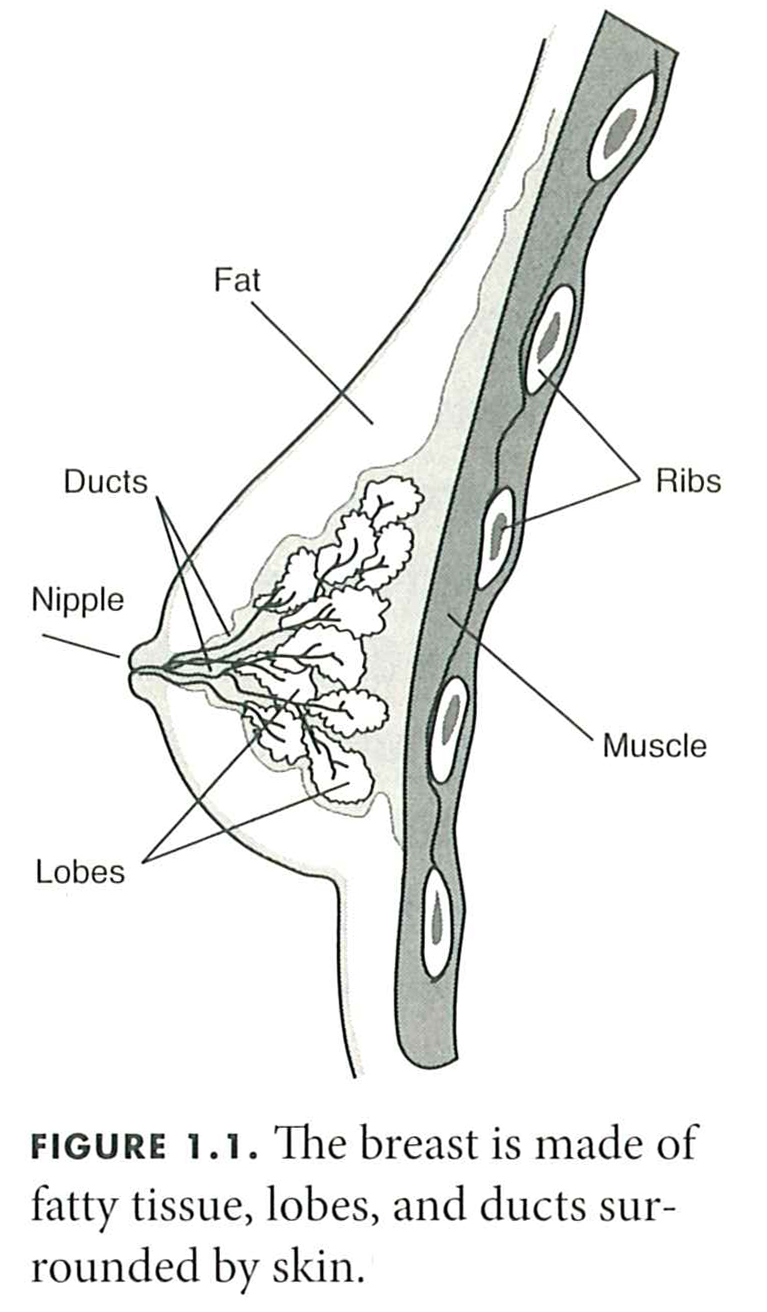
Breast Reconstruction Guidebook Figure 1.1What is nipple delay?

During the nipple delay procedure, the surgeon makes an incision in the skin and severs the breast tissue and blood vessels directly beneath the nipple (it remains attached to the surrounding skin). Due to this, the nipple is no longer dependent upon the blood supply directly beneath it and becomes accustomed to getting its blood supply through the skin. According to the Pink Lotus Breast Center blog, it actually recruits additional blood flow not previously established.

This is an uncommon procedure. If it is elected, it is performed some time before the mastectomy; two weeks for Angelina Jolie.

Why have a nipple delay?

Surgical nipple delay is used to decrease likelihood of nipple necrosis, which can occur because of loss of blood supply and can lead to nipple loss, following a nipple-sparing mastectomy.

Breast skin is fragile after mastectomy. If it’s exceptionally thin after the breast tissue is cut away or is handled too roughly, it may die. The same result may occur if the breast surgeon severs too many blood vessels that feed the skin or uses eletrocautery too aggressively and burns the inside of the skin, which may then blister and die.
– Steligo, Kathy. Breast Reconstruction Guidebook: Issues and Answers from Research to Recovery. Maryland: The Johns Hopkins University Press, 2012. Print, third edition.

I was not informed of this option prior to my own nipple-sparing mastectomy. My compromised blood flow resulted in necrosis on my left breast and I lost a nipple. If you are interested in reading about my bout with necrosis (including photos) and the hyperbaric treatment I underwent in an effort to thwart it, please read Tissue necrosis.

Related articles:

Source of Figure 1.1: Steligo, Kathy. Breast Reconstruction Guidebook: Issues and Answers from Research to Recovery. Maryland: The Johns Hopkins University Press, 2012. Print, third edition.

Angelina Jolie: I decided to be proactive

AngelinaJolieThe HBOC community is buzzing today. I’m sure you’ve already heard the news: Angelina Jolie underwent a prophylactic bilateral mastectomy in February ’13. She also revealed that she carries a mutated BRCA1 gene in an op-ed piece she wrote for the New York Times.

I wanted to write this to tell other women that the decision to have a mastectomy was not easy. But it is one I am very happy that I made.

For any woman reading this, I hope it helps you to know you have options. I want to encourage every woman, especially if you have a family history of breast or ovarian cancer, to seek out the information and medical experts who can help you through this aspect of your life, and to make your own informed choices. – Angelina Jolie

I’m very thankful and excited that she has decided to share her story. Along with Sharon Osbourne, Allyn Rose, Giuliana Rancic, Christina Applegate, Sheryl Crow, and other women in the limelight, she is using her platform to educate and bring awareness to hereditary breast and ovarian cancer. The story was the main feature on the CNN.com website the day the op-ed piece was published!

Just like me, Angelina Jolie had a nipple-sparing double mastectomy and chose the expander/implant route for breast reconstruction. She first had a nipple delay procedure, which is an extra step done two weeks prior to the mastectomy (see: Nipple delay). She had an inframammary fold incision, allograft, and a whopping six (!!!) drains post-op. The Pink Lotus Breast Center, where Angelina Jolie had her PMB, has posted more details of her journey. Read their great blog post.

Related articles:

World Ovarian Cancer Day

May 8, 2013World Ovarian Cancer Day: today is the first official World Ovarian Cancer Day.

Did you know that ovarian cancer has the lowest survival rate of gynecologic cancers? Almost a quarter million women are diagnosed each year and it is responsible for 140,000 deaths.

It is important to know the symptoms, which are often misdiagnosed. Do you know what they are? From the World Ovarian Cancer Day website:

  • Increased abdominal size / persistent bloating (not bloating that comes and goes)
  • Difficulty eating/feeling full quickly
  • Abdominal or pelvic pain
  • Needing to pass urine more urgently or more frequently

Early diagnosis greatly increases a woman’s chance of survival, however, women are usually diagnosed at a late stage as often the symptoms are attributed to menopause or digestive issues. This is all so familiar to me.

My mother’s story

Those of you who have been following my blog for a while already know that my mother is currently undergoing chemotherapy treatment for ovarian cancer. She was diagnosed less than a year ago, in June ’12.

Just like described above, she thought her discomfort and swollen belly were related to digestive issues. She was experiencing abdominal pain on her left side and frequently had to use the bathroom. A colonoscopy was scheduled to investigate what in her GI tract was causing this problem. The doctor was unable to complete the procedure – in the five months since her last abdominal/vaginal ultrasound, a tumor developed in her left ovary and grew so large (the size of a balled-up fist) that it restricted the large intestine.

The initial surgery removed a few outlying lumps, but majority of the mass was left intact. As of today, she completed six chemo treatments in Fall ’12 and five of six treatments in Spring ’13. Her doctors are optimistic and believe that her prognosis is good.

I’m scared. Our small family is devastated. My mother is weak and in pain. My father is struggling to support her physically, mentally, and emotionally. My sister (and her son) moved in with my parents to help however she can. I am helplessly watching and trying to support them all from thousands of miles away. I have hope that she will beat those awful odds that are against her.

Ladies, please talk to your doctor. Start those ultrasounds if you aren’t already doing them, especially if breast and/or ovarian cancer are prevalent in your family.

Resource highlight

My Destiny

While there are countless resources online available to those who are preparing or have already gone through a mastectomy, there area few that stand out. The My Destiny Foundation is one of my favorites. There is an unbelievable amount of information on this page: from lists of questions to ask potential surgeons, to information about BRCA mutations, to recommended FaceBook support groups, to tips on how to communicate the decisions you make to others, and so much more.

The site is run by two wonderful ladies who have been through it all: Lisa Sousa and Kim Richardson Emery.

My Destiny is an online community designed specifically for women, by women, who are at a high risk of developing breast cancer. We bring women together, provide accredited information and support, increase awareness and provide women financial, social, and emotional support that are undergoing a prophylactic mastectomy to reduce their risk of breast cancer!

Visit MyDestiny-US.com to tap into one of the great online resources for women considering a prophylactic bilateral mastectomy.

PARP inhibitor study

Research update

FacingOurRisk.orgA study on PARP inhibitors for advanced breast cancer is now open at many sites across the US and Internationally! You can help if you:

  • Have a BRCA1 or BRCA2 mutation
  • Have confirmed metastatic breast cancer
  • Her2neu negative (or Her2neu positive and have received previous anti-Her2neu therapy or are ineligible for anti-Her2neu therapy)
  • Have measurable disease

Learn more about the study, on the FORCE website.

Free webinar

FORCE will also host a free webinar: Updates on PARP Inhibitor Research.

Date: Thursday, February 28, 2013
Time: 12pm -1pm ET
Speaker: Susan Domchek, MD, Executive Director of the Basser Research Center for BRCA
More infohttp://www.facingourrisk.org/events/webinars/index.php#upcoming

While you’re at it

Help FORCE and Celebration Health by participating in a survey about long-term follow-up healthcare for preivors and survivors. This will provide important info about long-term health concerns for women with BRCA and other hereditary cancer syndromes.

https://www.surveymonkey.com/s/hbocsurvey

Happy 14th Birthday FORCE

Happy New Year/Happy Birthday FORCE

FacingOurRisk.orgFORCE – Facing Our Risk of Cancer Empowered just celebrated its 14th Birthday! FacingOurRisk.org is an amazing site that I have spent many hours reading through. There is a message board, local group finder, lots and lots of articles and other resources, a photo gallery, info about studies and clinical trial, and so much more. If you haven’t yet visited FacingOurRisk.org, check it out!

Family matters

It was time to make the call. I decided to do a little digging into my family history. Mom’s grandmother (her mom’s side) had ovarian cancer, my grandfather (dad’s side) had prostate cancer, my dad had an issue with a tumor near his kidney, my mom was just diagnosed with ovarian cancer, one sister was 28 when she was diagnosed with breast cancer and died just a year later, and my other sister is healthy and has not been affected thus far (knock on wood).

Although my own genetic test results were negative for the known BRCA mutations, my updated family history and recent personal history bumped me into the “high risk” category. Thus far everything that came my way via experience and information gave me more reason to move forward with the procedure. Other than the risks that go hand-in-hand with any major surgery, there was nothing significant that made me question if this is the right thing for me.

What if the MRI uncovered that the masses in my breasts were cancer? What if it was a false-negative and by the time I felt the lumps myself, it was too late? Will I ever trust another ultrasound or MRI? And if I don’t do this and down the road breast cancer comes into my life, will I be able to live with the decisions I make now?

So that’s it. Say tootaloo to the boobies. Time to part ways.

But why?

I never really worried or thought much about cancer until my sister was diagnosed with breast cancer when she was 28 (10+ years ago). She died a year later. So … annual mammograms began in my mid 20s and mid-year ultrasounds were added a few years later. The topic of a prophylactic bilateral mastectomy came up on a couple of occasions, but I didn’t think I had enough reason to seriously consider it. So far, so good.

In March 2012 an ultrasound spotted some issues. Three separate masses were present – two on the left breast, one on the right. They developed in the six months since the last mammogram. Based on quantity and consistency, the oncologist thought they were cysts. Rather than doing a biopsy to draw fluid for testing, he recommended that I first undergo an MRI screening. At this time I started doing some casual research on prophylactic bilateral mastectomies.  Waiting for test results was hell, but when they eventually arrived, they were good – no cancer. Whew! High five!

Fast forward to June 2012. I felt something unusual during one of my monthly self-exams. The lump I felt was in one of the three spots where the ultrasound found issues. Another ultrasound confirmed that two of the three spots had increased in size and were now palpable. Fine-needle aspiration biopsies were done and results sent for testing. I got names of a few plastic surgeons in my area and left with a plan to start the conversations, no matter the results. The biopsy results were negative for cancer, but there were abnormal cells detected. I already knew I have “extremely” dense breast tissue/fibrocystic disease (which can make diagnosis of cancerous tumors more difficult). I was told to continue my self-exams and keep regular screening appointments as I had in the past.