Author Archives: nope2BC

Unknown's avatar

About nope2BC

Check out my blog: Saying NOPE to Breast Cancer

Resource highlight

My Destiny

While there are countless resources online available to those who are preparing or have already gone through a mastectomy, there area few that stand out. The My Destiny Foundation is one of my favorites. There is an unbelievable amount of information on this page: from lists of questions to ask potential surgeons, to information about BRCA mutations, to recommended FaceBook support groups, to tips on how to communicate the decisions you make to others, and so much more.

The site is run by two wonderful ladies who have been through it all: Lisa Sousa and Kim Richardson Emery.

My Destiny is an online community designed specifically for women, by women, who are at a high risk of developing breast cancer. We bring women together, provide accredited information and support, increase awareness and provide women financial, social, and emotional support that are undergoing a prophylactic mastectomy to reduce their risk of breast cancer!

Visit MyDestiny-US.com to tap into one of the great online resources for women considering a prophylactic bilateral mastectomy.

Snot delivery

Low healthHaving a cold within a week of a bilateral mastectomy is not fun or pretty. I started coming down with something a few days post-op and knew it was going to be trouble. Today, two weeks out, I am still stuffed up and hacking up stuff. I’ve gotten to the point where I feel nauseous from the amount of mucus I have ingested. Did someone order some snot? My nose is raw from trying to avoid that by blowing out whatever post-nasal drip has decided to make an appearance. That’s the “not pretty” part.

The “not fun” part is even worse. Blowing my nose, coughing, and especially sneezing are extremely painful. Each one of those actions causes abrupt movement in the chest/rib cage and is just brutal. My first sneeze took me completely by surprise. Immediately after it came, I screamed out in agony. My husband insists that the coughing and sneezing is good for me, because it forces a stretch. I think he’s talking out his butt and just trying to make me feel better.

Remedies

I got some great advice from the ladies in the FaceBook support groups (see: #1 on my list of Resources). Here’s what I have been doing to make it a bit easier on myself:

  • Carry a pillow, always. When I feel a cough or sneeze coming on, I gently hug it against my chest to soften the blow.
  • Passion orange guava juiceWater, water, water. I drink plenty of water. Guava juice is also good and tasty! Bolthouse Farms Passion Orange Guava juice is my drink of choice.
  • I drink a lot of hot tea and eat chicken soup. Although I maintain a whole foods, plant based diet, I put it on hold for the sake of getting some relief. Chicken soup helps!
  • I take hot, steaming showers.
  • Use a humidifier.
  • Get plenty of rest.

PARP inhibitor study

Research update

FacingOurRisk.orgA study on PARP inhibitors for advanced breast cancer is now open at many sites across the US and Internationally! You can help if you:

  • Have a BRCA1 or BRCA2 mutation
  • Have confirmed metastatic breast cancer
  • Her2neu negative (or Her2neu positive and have received previous anti-Her2neu therapy or are ineligible for anti-Her2neu therapy)
  • Have measurable disease

Learn more about the study, on the FORCE website.

Free webinar

FORCE will also host a free webinar: Updates on PARP Inhibitor Research.

Date: Thursday, February 28, 2013
Time: 12pm -1pm ET
Speaker: Susan Domchek, MD, Executive Director of the Basser Research Center for BRCA
More infohttp://www.facingourrisk.org/events/webinars/index.php#upcoming

While you’re at it

Help FORCE and Celebration Health by participating in a survey about long-term follow-up healthcare for preivors and survivors. This will provide important info about long-term health concerns for women with BRCA and other hereditary cancer syndromes.

https://www.surveymonkey.com/s/hbocsurvey

Foobie Fitness

Fitness, nutrition, and your health

Speaking of exercise … post-mastectomy exercises are crucial to a full, healthy, and speedy recovery. I keep mentioning Casey Eischen’s program, because it really is a great one and has been working well for me. Every day I do exercises and every day I get further than the day before.

Casey EischenClick here if you’re interested in learning more or contacting Casey Eischen. This amazing lady 1. is a fitness expert and nutrition coach that is certified in training women who are recovering from breast cancer and related treatment or surgery, 2. she underwent a prophylactic bilateral mastectomy herself in November ’12, and 3. she took some time to provide invaluable feedback for this post. Also, be sure to visit (and like) Foobie Fitness, a FaceBook community page run by Casey Eischen.

NotePost-op workouts are one thing. Preparing your body before the procedure is another, and just as important. It is the #1 item on my preparing for surgery checklist: get in the best physical shape you can manage before the surgery. The healthier the body, the more tolerant it is to trauma, and the faster it recovers. I workout on a regular basis, however, I’m no fitness guru, so I would advise discussing exercise with your doctor and/or a certified trainer.

In addition to physical fitness, nutrition is extremely important to aid healing and keep a hand on inflammation. According to Casey, Inflammation is attributed to the improper functioning of the immune system. Check out this meal plan she designed for Simple/Clean Nutrition.

Something that should go without saying – smoking is a big NO-NO.

Details

Pectoralis major, serratus anterior

The breast reconstruction procedure utilizing expanders, and ultimately implants, wreaks havoc on the pectoralis major muscle. The nerves feeding the muscle are snipped when the pocket is created (note: this was the case with my PBM, but may not be the standard procedure for all plastic surgeons, so please talk to your doctor). This causes the muscle to atrophy and lose some of its functionality. The more developed the pec major, the more difficult (read: painful) the expansion process and following recovery will be. A few months before my prophylactic mastectomy, once I knew it was in my future, I began altering my routine. I stayed away from push ups and flys and instead focused on core and legs. After the procedure, because pec major is traumatized, core and legs must pick up the slack.

I’ve fallen and I can’t get up

Maya

Maya

My abs got me out of trouble on day three after the mastectomy. I was sitting on the floor petting a cat and decided it would be a good idea to lay down flat on the floor. That was fine and dandy until it was time to get up. No matter which way I tried to get up, I felt pain. Couldn’t roll over to my side, because I still had surgical drains coming out of me and I couldn’t use my arm to prop myself up if I ever got there. Bending at the waist was not working – my serratus was screaming. I finally wedged my feet under the couch and then used the leverage and my lower abs to bend at the waist.

It was scary as I was laying there helpless, but as soon as I managed to get up, I said to my self outloud: YOU F$@#ING IDIOT! It’s funny now, but wasn’t then. Moral of the story: don’t lie flat on your back three days after surgery, stupid.

Shower time

Taking a shower after a prophylactic bilateral mastectomy can be a challenge. For the first few days after the procedure, it is not a good idea, because of limits on mobility/range of motion, weakness, and the presence of surgical drains. Some doctors instruct their patients not to shower until the drains have been removed. Until that time, sponge baths are the way to go. I got clearance from my doctor to take a shower four days after my procedure. I almost hugged him when he uttered those words.

The magical day was Saturday (surgery was Tuesday). I waited until about 30 minutes after taking a dose of pain meds, so they had a chance to work their magic. My equipment:

  • Someone to help
  • Shower chair or a small cooler with a towel draped over it
  • Antibacterial soap
  • Shampoo/conditioner
  • Regular pouf
  • Back brush/pouf

The whole process took somewhere around 30 minutes, with most of it spent on undressing and then putting clothing back on in what seemed like slow motion. I wore my underpants and clipped my drains to them (washed my butt last:)). An alternative is to wear a shoestring or a lanyard around the neck and clip the drains to that.

Yoshi

Yoshi: my fav t-rex

I sat on the cooler facing away from the shower head and let the water run down my back rather than directly onto my incision sites and boobies. I insisted on doing the washing, including my hair. It was tough to reach up and scrub – taking it slow and noting when it was too much was the key. The back bush helped with the hard-to-reach places. It was a much needed extension of my t-rex arms. I put antibac soap directly on my hands and gently washed the incision sites, the armpits where the drains exited, and the rest of the chest. After showering, I patted the chest dry with a clean, sanitized towel. This was a much needed refresher!

Sasquatch xing

Sasquatch xing

In one week, I progressed from the sit-down shower or a bath (water level below the chest) to my first real, solo, stand-up shower. The day I wrote this post, nine days post-op, I felt limber enough to shave my legs. Someone release the marching band! My armpits are still a bit sasqutch-esque, because the drain tube holes haven’t completely healed, so I’ll hold off shaving them.

Day 3 of recovery, infinity, and beyond!

Drain removal

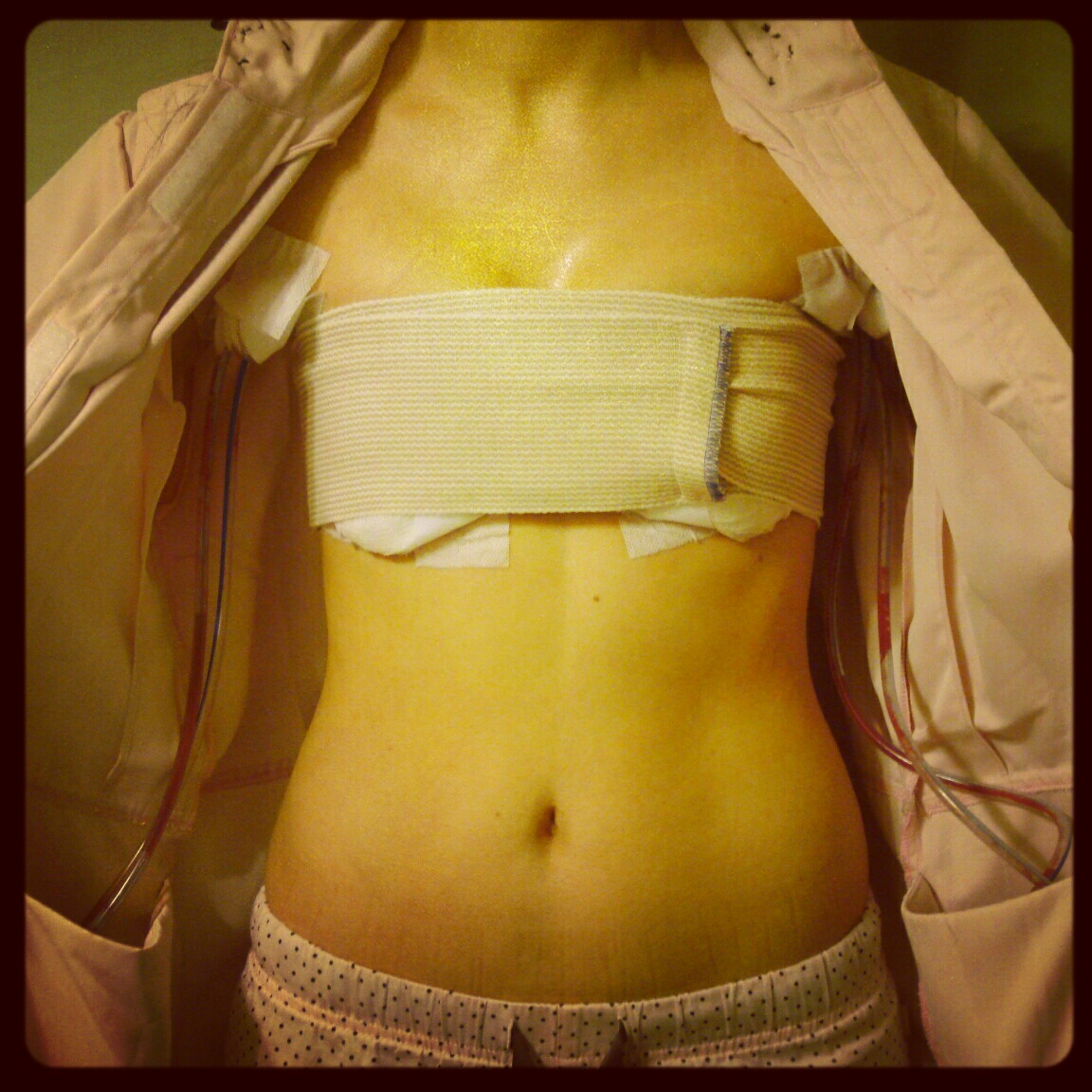
This day (Friday; surgery was Tuesday) was one of the first post-mastectomy happy days. Had the first follow up appointment with my plastic surgeon. I was up on my feet by this day, but not yet running laps around the neighborhood. We pulled up to the hospital and a nurse came out to get me with a wheelchair. I wore my beautiful Pink Passion recovery gown.

Drain in right armpit

Drain in right armpit

Dr. M noted that I was recovering nicely thus far. My drain output was very low on the two anterior drains (20ml/day each), so it was time to remove them. The sensation of the tube being pulled out was odd, but not very painful. The little pain I experienced was from the stretching of the hole in my armpit through which the tube passed. [Side note: I know the pic on the right is gnarly, but I gave you fair warning (top right of every page) that I include content that is NSFW/graphic, so deal with it.] The two posterior drain tubes were still kicking out about 60ml/day, so they were left in for a few more days.

The tubes serve a very important role during the recovery process: they remove the extra fluids your body produces as it heals itself around the incision and surgery sites. If those fluids are not taken away, seromas or hematomas can develop.

A seroma is a pocket of clear serous fluid that sometimes develops in the body after surgery. When small blood vessels are ruptured, blood plasma can seep out; inflammation caused by dying injured cells also contributes to the fluid.

Seromas are different from hematomas, which contain red blood cells, and form abscesses, which contain pus and result from an infection. – Wikipedia

Sleeping

Roses from a dear friend

Roses from a dear friend

I was expecting to be doing a lot of snoozing because of the narcotics, but was very surprised by how awake, alert, and active I was immediately after my return home from the hospital. I spent a lot of time online – most often in one of the FaceBook groups (See: Resources), keeping friends up-to-date, writing thank you cards, walking around the house, and general random stuff. I found that if I settled in on the recliner and forced myself to calm down and close my eyes, I didn’t have any trouble sleeping, but overall I was not beat by any means.

Exercises

I did post-op exercises from Casey Eischen’s program a few times per day. Each day it was a bit easier and I could do more.

2/1: Check out a more recent post about exercise and nutrition: Foobie Fitness

I was excited about Saturday, because I got clearance from Dr. M to take a shower! He even told me to wash my own hair. Who would’ve thought I’d be that ecstatic about bathing. More on that next.

Day 2 of recovery

Total hospital stay after my prophylactic bilateral mastectomy was just a tad over two days. I was not up to or interested in any friends/other family visiting while I was there. Sitting up in bed was challenging and exhausting enough.

The morning of discharge, I saw both surgeons, had a few more hospital staff visitors, and got the discharge paperwork. Prior to surgery I made a list of questions we had to get answered before leaving the hospital, so we gathered the info:

  • QuestionHow and when do I empty the drains? A nurse demonstrated how to do this properly. The drains need to be emptied at least twice per day.
  • Do I need to change the dressings? No, leave as is until the follow up appointment and further instructions from the plastic surgeon.
  • When is my follow up appointment? Friday morning (3 days post-op).
  • Can I shower? Not right away. Take a sponge bath or use baby wipes, until told otherwise.
  • Who do I contact in case of emergency or if I have questions after-hours? Call the plastic surgeon’s office. If after-hours, the answering service knows how to reach him.
  • When do I get the pathology results? They will be available in about a week. Make an appointment with the breast surgeon.
Pink Passion gown

Pink Passion gown

I put on the super-awesome gown that was dropped off by the local Pink Passion Breast Cancer Support Group coordinator. It opens in the front, has flaps on each side of the chest for easy access, and has huge inside pockets to hold the drains. The hubby got the car warmed up and brought it to the front door, where I was taken in a wheelchair by one of the nurses.

Finally home

Borrowing a recliner is the best thing I did to prep for the recovery. It is an electric one, so I don’t have to pull the lever to use it. It is set up downstairs in the living room, with a bunch of the stuff from my checklist spread out around it. I could rest and sleep comfortably without worrying about turning over in the middle of the night.

Bathroom breaks

Prune juice

Prune juice

Getting the medication dosage and timing right took a couple of tries, but once I got it nailed down, I was doing great. The trips to the bathroom decreased since I was off the IV, but I made it a point to try to go every four hours when I woke up for meds. I was conscious of the fact that I hadn’t gone #2 yet, but not freaking out. Since the stool softener (Colace) was the only thing that got me nauseous, I stopped taking it and started downing Sunsweet Prune Juice. This worked! Also, each time I got up, I took at least two laps around the house to get the blood flowing.

Drain management

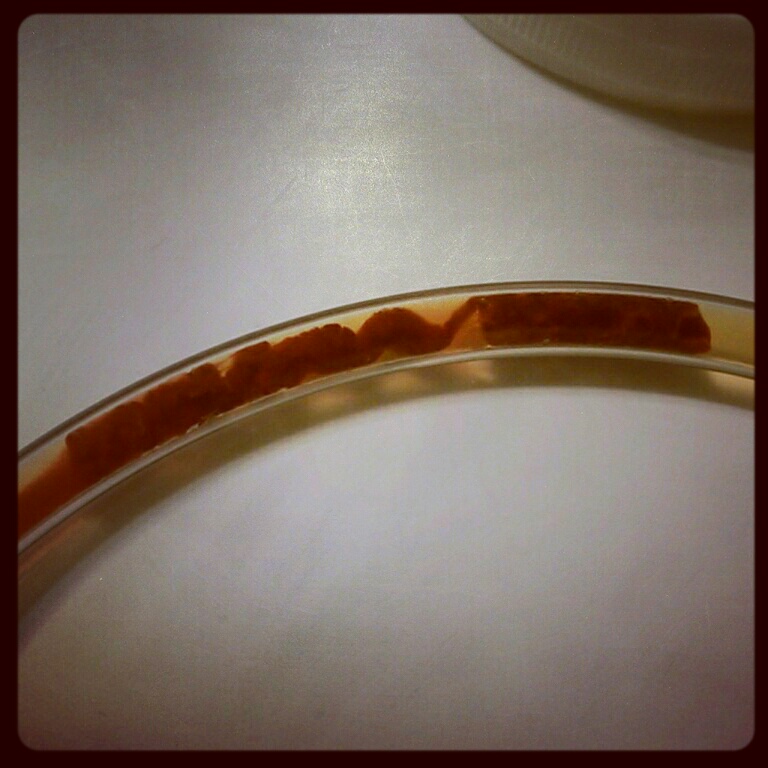
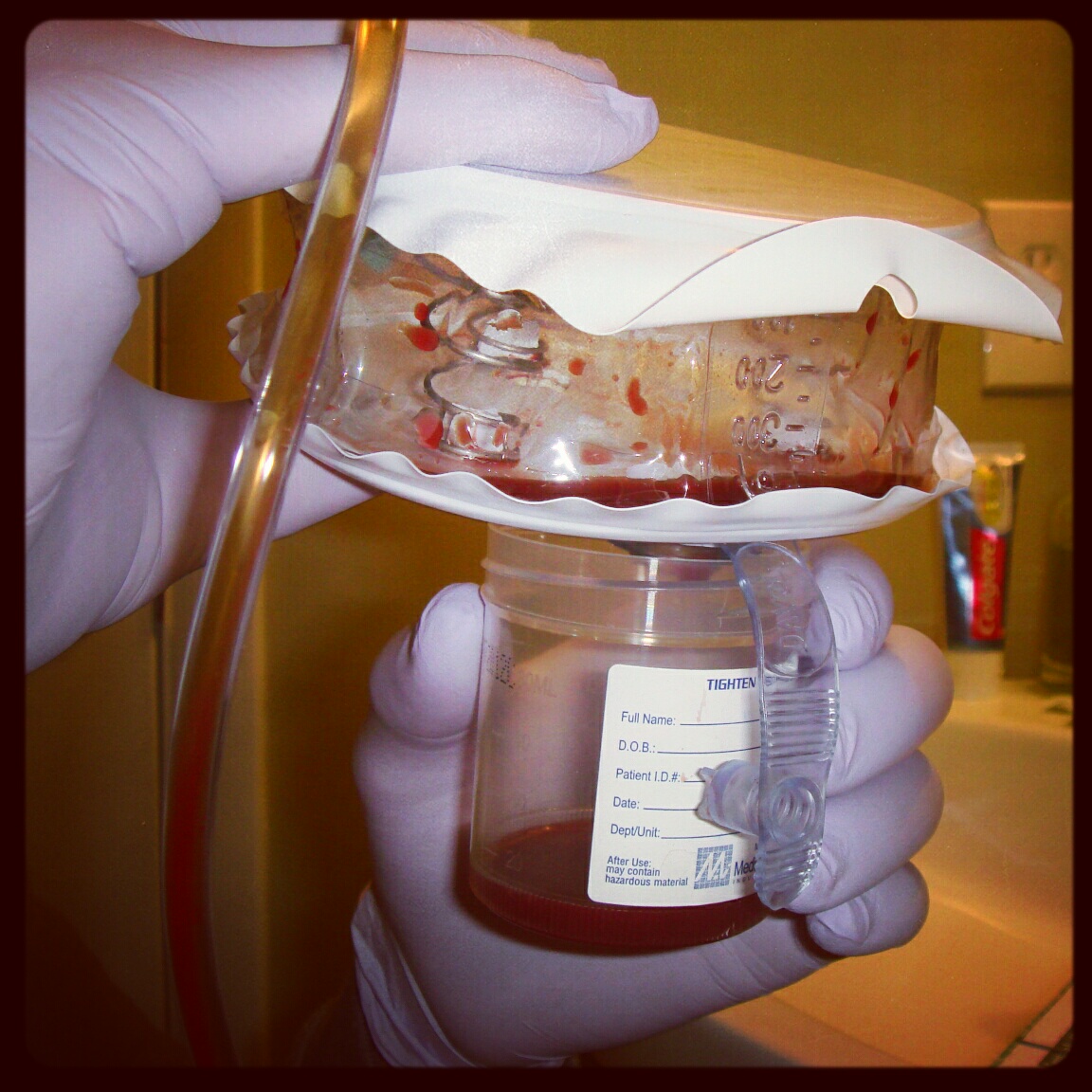
Emptying the drains was a bit overwhelming at first, but became just a normal thing we had to do. Hubby and I did this two times per day. Gear: rubber gloves, alcohol swabs, measuring cups, note pad, and pen. Each reservoir was emptied, the volume recorded, the port/hole wiped with an alcohol swab, the drain “charged,” and the fluid flushed down the toilet. The drain tubes were interesting (one might also use the word “gross”) to look at. There were clots visible in the lines, but not a problem. The fluids kept draining, so everything was good.

Clot

Clot

More fun stuff coming next, but first, an important announcement from Grumpy Cat, a.k.a. Tardar Sauce.

Day 1 of recovery

Mobility

Although getting in and out of bed got easier, I was still unable to manage a trip to the bathroom in under 15 minutes. A nurse was called in each time I had to go. The feel-good button, the call nurse/TV remote, the oxygen tube, and the finger pulse oximeter clamp had to be removed before I even sat up. The IV bag was attached to the stand, we gathered up all four drains, hubby made sure my naked ass wasn’t completely bare and off we went. By about noon, we were able to do it without a nurse.

I started doing range of motion exercises while still at the hospital. If you haven’t already seen the video from Casey Eischen in my Post-op exercises post, make sure you check it out.

2/1: Check out a more recent post about exercise and nutrition: Foobie Fitness

Drains

Drain

Drain

On the day of surgery and day 1 of recovery nurses emptied my drains. They weren’t the typical JP bulb-type ones, but oval hemovac spring evacuators. Each reservoir was labeled left/right and anterior/posterior. The fluid collected was measured and then recorded. Emptying them was not difficult; keeping them untangled was. Rather than coming out of my sides, the tubes exited my armpits. This placement made for a lot of discomfort anytime my arms were moving (= all the time).

Wound dressing

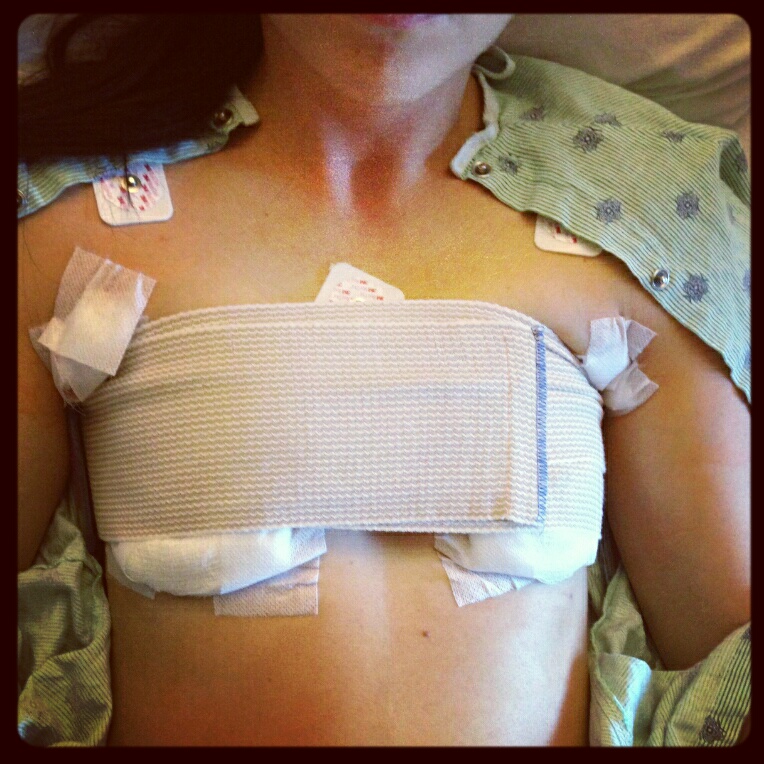
There was gauze and tape in the armpits for the drain tube sites; the incisions were covered by sterile strips; and the whole chest was wrapped in an ace bandage. Due to the meds, I didn’t feel much pain, but did feel discomfort and pressure – like an elephant sitting on my chest.

Dressings

Dressings

Food

DOsOn the day of surgery I was on a liquid diet, but it wasn’t even relevant as I was not hungry at all. I downed crackers and a lot of water. Hall’s Vitamin C cough drops helped with the dry mouth and throat. There was a menu in my room and food service staff came around collecting orders. I was worried about constipation, so I focused on high-fiber snacks and meals. Breakfast of choice was plain, bland, tasteless oatmeal. Lunch: dressing-less garden salad. Dinner: mushroom soup.

Spirometer

Spirometer

Spirometer

In-between meals and trips to the bathroom, I did breathing exercises using the spirometer. It is a plastic box with a tube attached to it, used to get the lungs back up to full capacity and to prevent pneumonia. You inhale through the tube and try to keep the ball in the air. This gizmo came home with me to continue the exercises.

Pain management and discharge

Typically patients return home after one night’s stay in the hospital. The throngs of nurses, residents, coordinators, and doctors (I really lost count) make their rounds in the morning to see how things are going. My breast surgeon determined I was in great shape and ready to go. The nurses started the process to ween me off the morphine and transition to my prescribed narcotics (Demerol). Don’t know who or why the call was made to give me something different than what I would have at home, but they started me on Norco. Pepcid AC and Colace joined the party too. This is about when the morphine itch started. The back scratcher was my best friend.

I just needed to see the plastic surgeon for his blessing to head home. He ended up with a couple of emergency patients and did not make it to see me. After we spoke via telephone I had the option to go home and start on the Demerol or stay another night and get a prescription for Norco filled when the pharmacy opened. I opted to say and not risk being in pain without access to a remedy.

That night was uneventful. On to Day 2 of recovery.

The big day

WARNING: NSFW / graphic content below.

Final preparations

NoteDuring the last few days before surgery, I made final preparations for the big day. One of them being picking up my dad from the airport. He surprised me the Thursday before surgery by telling me he purchased his ticket to fly in from Europe to spend a month out here and help my husband take care of me. A great relief to have an extra set of hands. It’s nice to have dad here, but I plan on making a quick recovery, so I hope he doesn’t get bored!

I received two separate calls from the hospital the day before the procedure confirming we were still a “go.” I got a lot of detailed information about the timeline and what the day would look like. I confirmed that 1. I would be in a private room (space for hubby AND dad to spend the night) and 2. the hospital has wi-fi.

The night before surgery, I made sure the recliner and area around it were ready for my return home. I gathered all of the things mentioned on my checklist, without exception. I packed my hospital bag with all of the necessities and hit the sack early. I was expecting to have a bit of anxiety in the last few days leading up to the surgery, so I had my doctor write me a prescription for Ativan. The bottle is still full. I was a bit nervous, but not as much as I thought I would be.

The morning of my prophylactic bilateral mastectomy
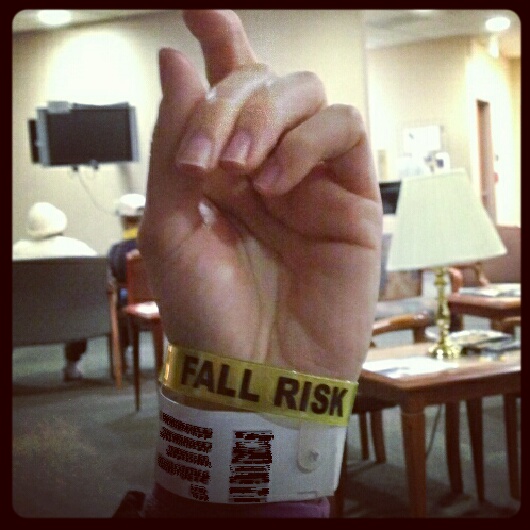
ID and FALL RISK wrist bands

ID and FALL RISK wrist bands

I was told to be at the hospital by 5:30am, with surgery scheduled to start at 7:30am. We arrived a bit early and waited to get checked in. The receptionist confirmed my name and date of birth and tagged me with my wrist band and the handy-dandy “FALL RISK” warning bracelet.

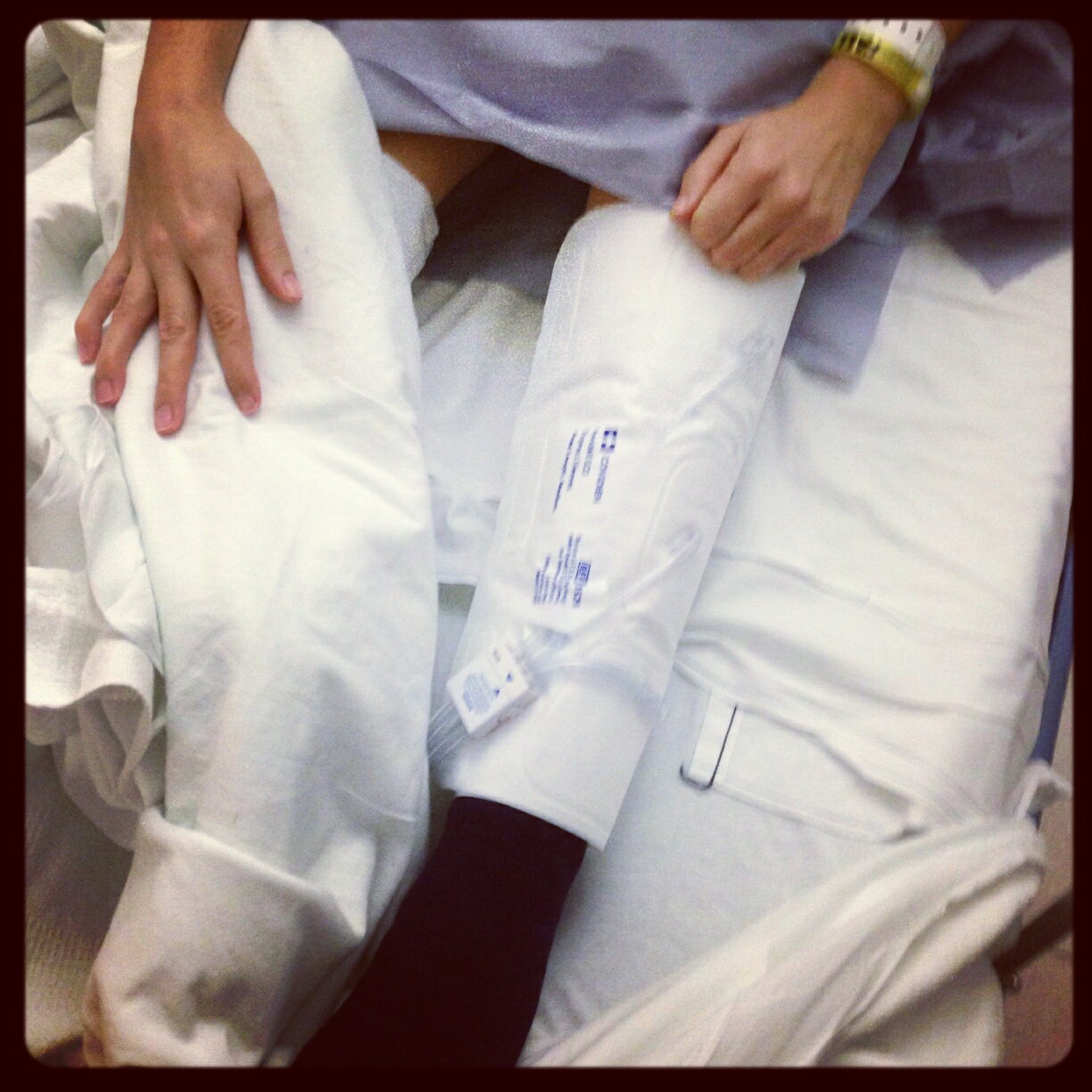
About 30 minutes later, I was called back by the pre-op nurse. She took my vitals, had me change into a Bair Paws gown (nothing underneath), and asked for a urine sample. We went over all of the paperwork, including consent forms I already signed. I was sure to point out that I didn’t consent to residents or fellows performing any part of the procedure, which was noted. She got my compression socks and booties on and hooked up, another nurse came in and got my IV line in, and then hubby and dad were called in to see me.
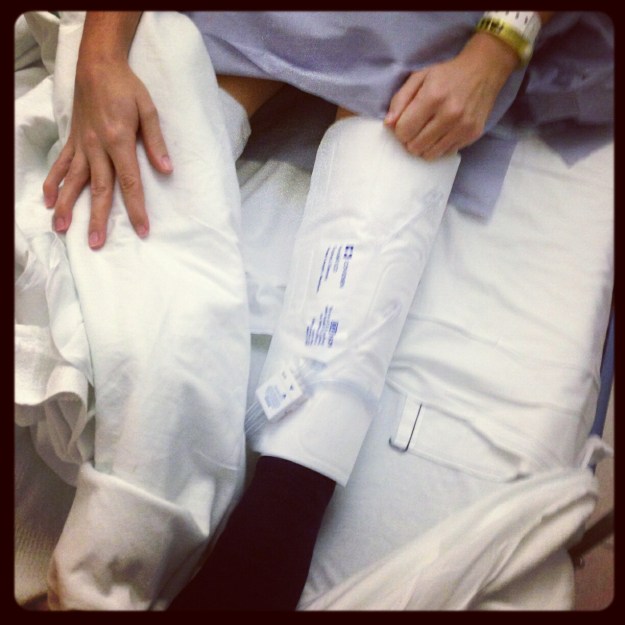
Compression socks and booties
Compression socks and booties

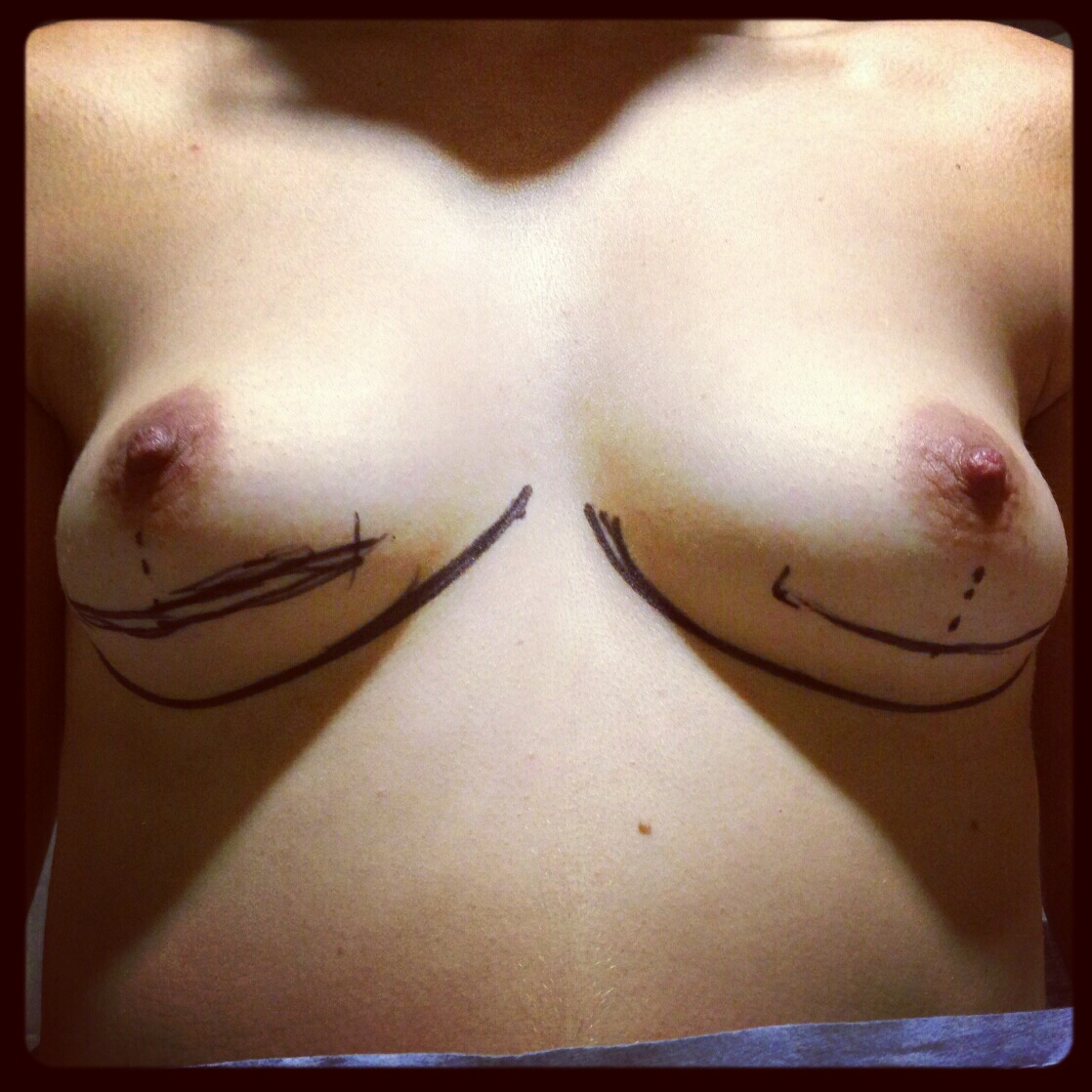
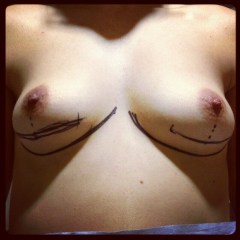
Incision markings

Incision markings

A few different nurses, the anesthesiologist, and both surgeons stopped by. I mentioned that I would love to not have any nausea once I woke up and they gave me something. The plastic surgeon marked up my chest wall for the smiley face incisions (with his high-tech Sharpie). BTW, I am 5’4″, 125lbs, and 34A.

I spent a few more minutes with the family and then it was time to roll out. I was wheeled to the operating room where I got to meet a few more of the surgical staff. I scooted over to the operating table, got my arms strapped in and that is all I remember.

The surgery took over five hours: three hours for the mastectomy, two and a half for the expander placement. The fam got regular updates from the operating room (five total) via telephone call into the waiting room. Each surgeon came out to speak with them when their piece was over.

Recovery room

I woke up in the recovery room with a nurse watching my vitals. She made sure I was comfortable and wasn’t feeling nauseous. After an hour another nurse came over to wheel me to my room. While he was there prepping, I had a very sudden wave of nausea wash over me. Got an injection of something and an alcohol swab to sniff (this actually helped) . Once I was OK, we made the trip to my room.

I had a bit of a hard time moving to the bed once in the room. The nurse offered his arm and started pulling me over, but that was painful. We decided to just have his arm available and I would pull instead. I think he got impatient and gave me a little yank at the end. I finally settled in and after about 20 minutes my husband and dad came to my room.

I was hooked up to a morphine drip, which delivered a steady flow of the golden juice. I also had a button I could push for an extra kick that could be added (only every 10 mins). The machine kept track of how often extra meds were requested and how many times it actually delivered. That day I had over 20 requests, but only 12 deliveries, if I remember correctly.

I ate crackers and drank a lot of water. I made my first trip to the bathroom around 7pm. Getting out of bed was rough – needed two people to help to and in the bathroom: one to manage the drains and the other to help on the toilet. Although I felt the need to go, I had a rough time making my body obey. I peed in a “hat” that measured the output which was recorded by the nurse. I made a total of four trips to pee the first night, with each one easier than the last.

It only gets better from here! On to Day 1 of recovery.